WARNING!
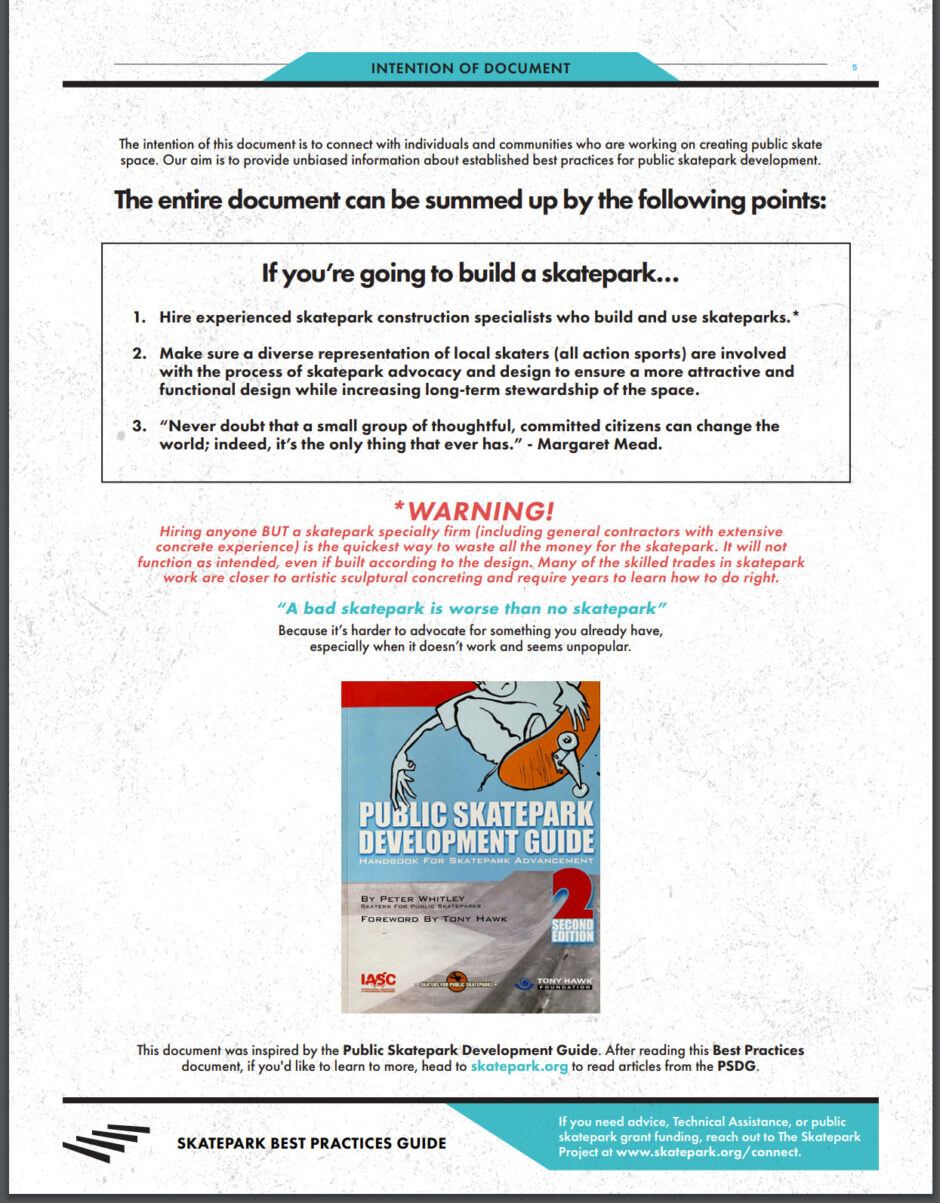
From page 5 of The Tony Hawk Foundation’s Skatepark Best Practices Guide, a big fat red warning to city officials looking to build a public skatepark in their community.
This free online guide book focuses on ensuring the quality of skatepark construction.
From page 4 of the guide, a WARNING!!! before the page 5 warning:
Hiring anyone BUT a skatepark specialty firm (including general contractors with extensive concrete experience) is the quickest way to waste all the money for a skatepark. It will not function as intended, even if built according to the design. Many of the skilled trades in skatepark work are closer to artistic sculptural concreting and require years to learn how to do right.
Again – skateboard wheels are measured in millimeters!
Skatepark design and construction requires highly experienced experts in multiple skatepark specific trades. It helps tremendously is they are also skaters themselves.
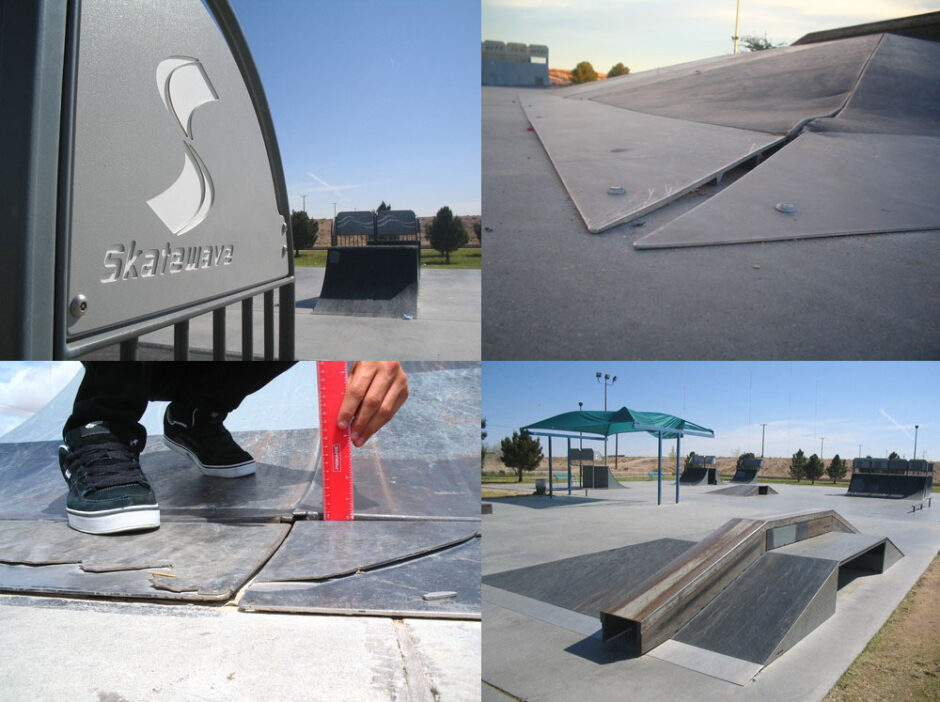
Metal Skatewave Ramps – circa 2002
When it opened in September 2002, the Skatewave ramps placed on a concrete slab off Saul Kleinfeld in the Far East were the City of El Paso’s first stab at a public skatepark.
Then City Rep Dan Power called ’em a cost effective solution, but the ramps broke down, quickly became dangerous, and would burn your hide in hot summer. The City went on to purchase 7 Skatewave ramp layouts.
Skatewave is a brand of modular metal skatepark equipment manufactured by a Minnesota company called Landscape Structures and distributed regionally by parks outfitter called Exerplay. The Skatewave product line was actively sold from 2001 to 2017.
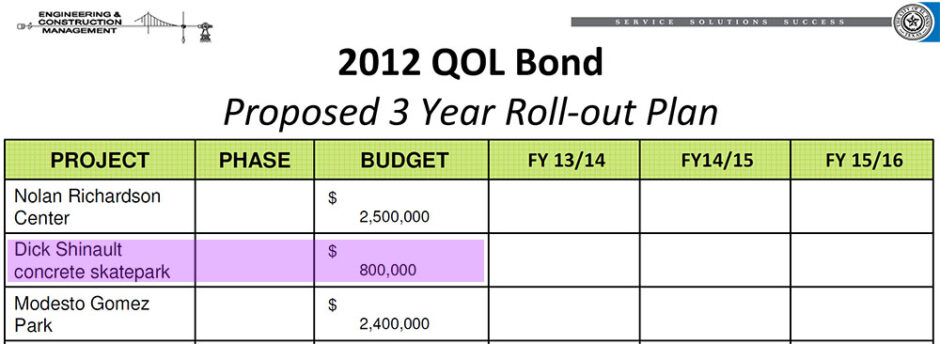
First whiff of a concrete redo
In 2013, an online document revealed a whopping $800k to be allocated for a concrete redo Dick Shinaut. The document quickly disappeared off the city’s website as it became apparent the city had more projects on it’s 2012 QOL Bond wish list than it could pay for.
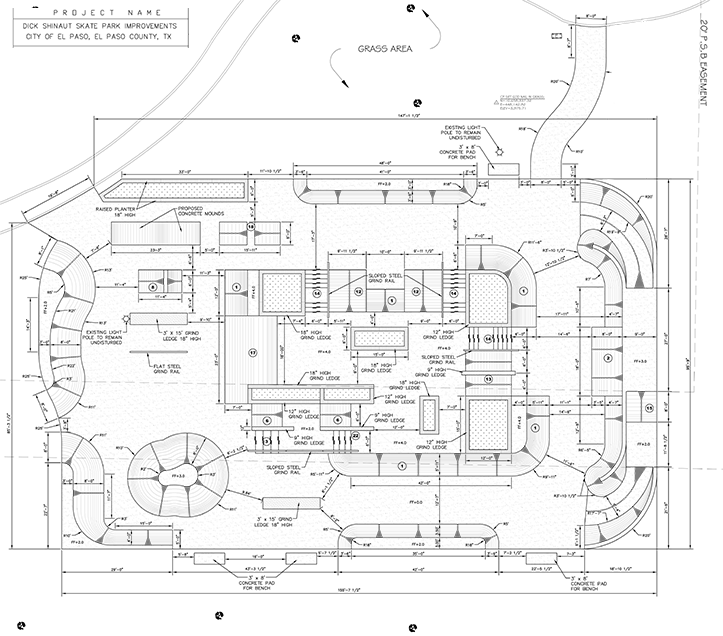
Poor design concept
Fast forward to 2019. Without any public input sessions or public announcement, design for the Dick Shinaut concrete redo was well underway when EPSA was surpisingly contacted by the engineering firm Brock-Bustillos to review their first-ever attempt at drawing skatepark construction documents.
The design concept was no bueno, without flow and overstuffed with ill-placed obstacles.
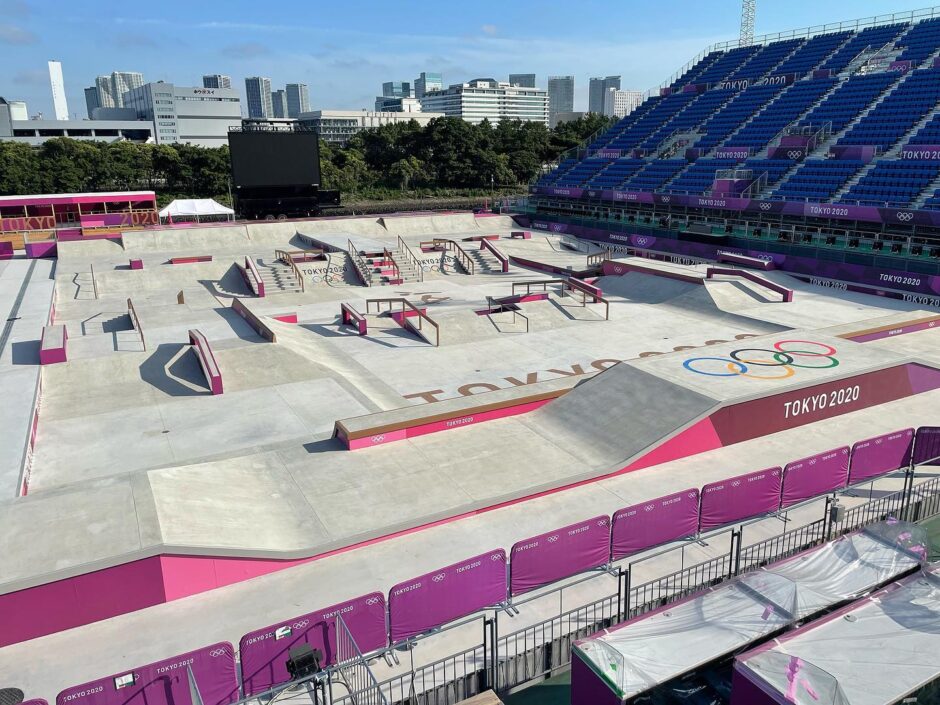
The modern standard – 2020 Tokyo Olympics
Multi-leveled with many long lanes for back-to-back trick combos going down the line – we count at 20 lanes on the Tokyo course!
This 2020 Olympic competition street course is a what a street plaza should modeled after. Taller end caps for speed with a variety of smaller and larger obstacles that encourage flowing down the line for all levels of skaters. NOTICE: no speed killing, big riser block in the middle here!
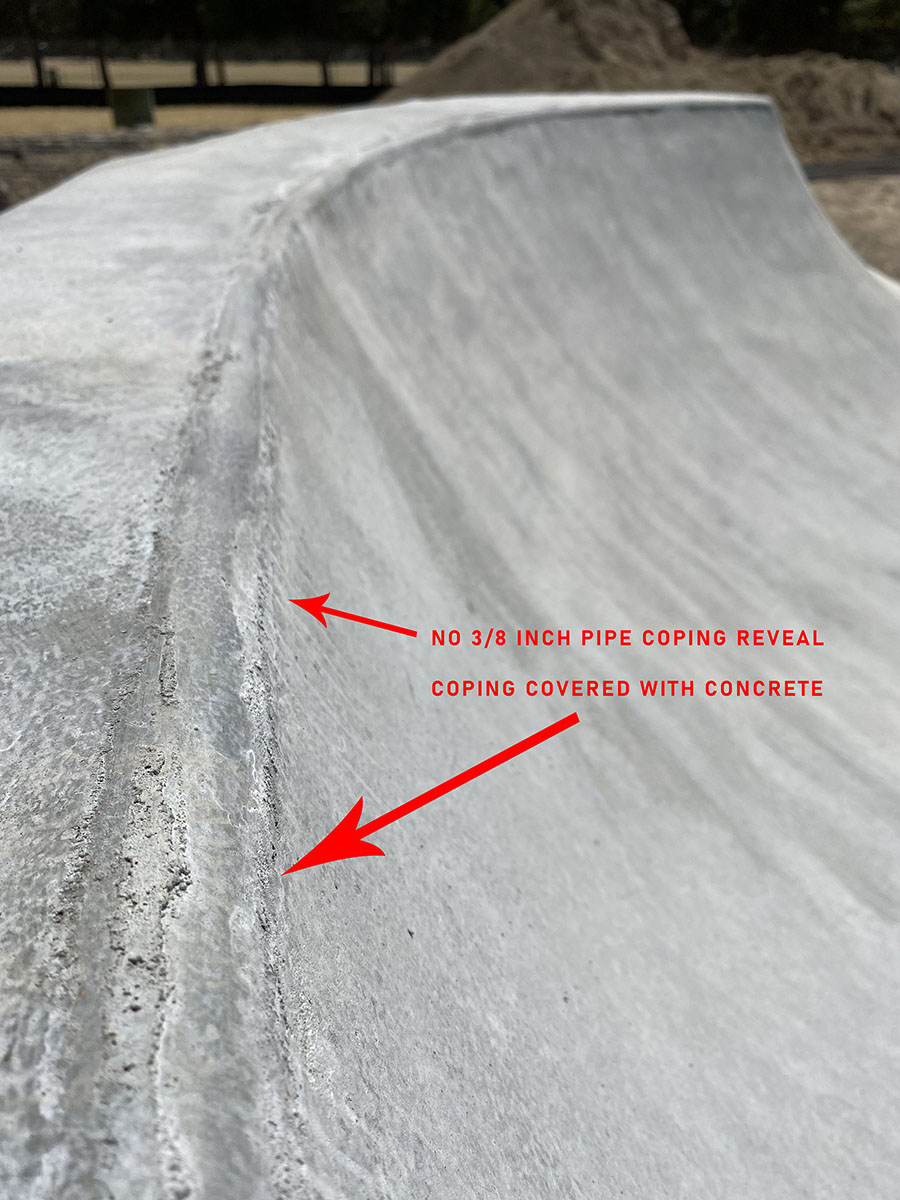
First pour woes
Obvious to anyone in the know of building skateparks, these guys were blowing it big time!
At the one and only pre-install meeting attended by EPSA, some of the words heard on the jobsite by folks leading the project:
“Skaters will skate on anything.”
“Ah, we’re just winging it!”
“As a skater, you have no value to the construction of this project.”
There were so many examples of Bad Skatepark Building at Dick Shinaut goin’ down, we felt compelled to share a few more photos in hopes helping other skatepark advocates avoid these types of issues in the future.
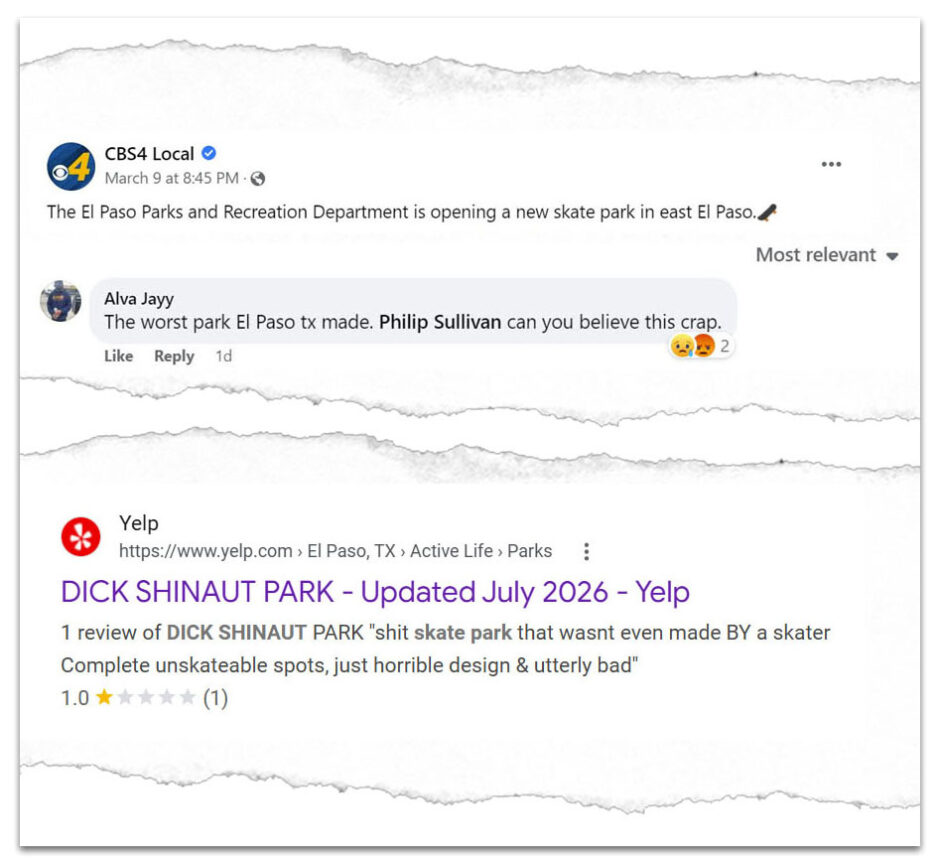
Social media backlash
The park redo opened in March 2023 and was touted a success in the local media. However, a flood of bad reviews from knowledgeable end users on social media told a much different story.
The Yelp review is extremely critical, and pretty accurate, except one star might be generous.
El Paso skaters deserved better – the end result falls way short of modern public skatepark standards and is extremely frustrating.
Moving forward, we hope cities that invest in public skateparks can learn from the failures of the Dick Shinaut skatepark redo and make better decisions with taxpayer money by simply hiring public skatepark experts.